


Challenge by Decathlon - Help Your Oma to Be a Champion!
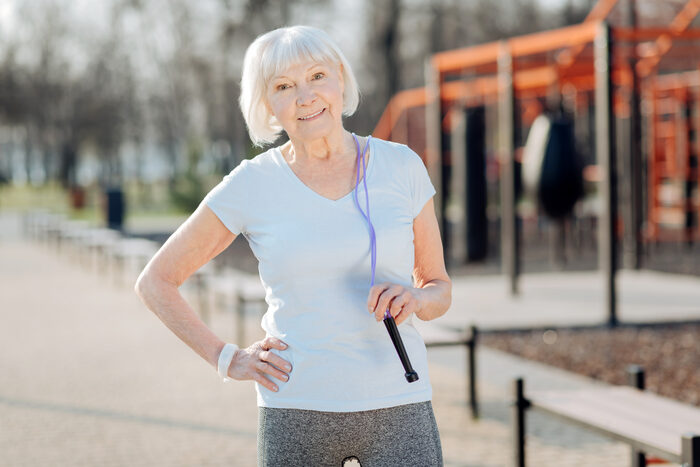
There is a growing need for accessible and engaging physical activities for seniors. Many existing sports and fitness programs are not well-suited for older adults, leading to a decline in physical activity, increased health risks, and social isolation.
We are looking for innovative solutions that can sustainably increase physical activity levels among seniors. The solution should focus on accessibility, safety, and social connection, with the ultimate goal of improving the long-term health and well-being of the aging population.
- Problem Statement: As populations age, there is a growing need for accessible and engaging physical activities for seniors. Many existing sports and fitness programs are not well-suited for older adults, leading to a decline in physical activity, increased health risks, and social isolation.
- Challenge Objective: Develop a solution that promotes and facilitates physical activity for seniors. This could be a platform to connect seniors with suitable local sports clubs and community programs, a gamified fitness tracker designed for older adults, or a tool that helps community centers design safe and effective exercise routines.
- Expected Outcomes: We are looking for innovative solutions that can sustainably increase physical activity levels among seniors. The solution should focus on accessibility, safety, and social connection, with the ultimate goal of improving the long-term health and well-being of the aging population.
- Data Provided by Partner: Anonymized data from public health surveys on senior physical activity levels.
- Support and Resources: Mentors with backgrounds in sports retail, business expansion and team management will be available to provide guidance on the specific needs related to various retail and human topics.
Context, Data and reasearch:
The survey reveals that 38% of Europeans play a sport or exercise once a week, while 17% play less than once a week and 45% do not engage in physical activity at all. The share of inactive people, while stable compared with 2017, has increased by 6 percentage points since 2009. Only less than one in ten (6%) respondents exercise five times a week or more (stable). During the pandemic, half of Europeans halved if not completely zeroed their activity level. As for a comparison between age groups, respondents between 15 and 24 years old engage in physical activity with some regularity 54% of the time, a figure that drops at 42% between 25 and 39, 32% between 40 and 54, and 21% among those over 55. Overall, only a minority of Europeans practice recreational physical activity regularly. The main obstacles are, in descending order, lack of time, lack of motivation or lack of interest in sports (Source).
A recent study (1) found that nearly one third (31%) of the world’s adult population, 1.8 billion adults, are physically inactive. That is, they do not meet the global recommendations of at least 150 minutes of moderate-intensity physical activity per week.
Globally, there are notable age and gender differences in levels of physical inactivity.
- After 60 years of age physical inactivity levels increase in both men and women.
https://www.who.int/news-room/fact-sheets/detail/physical-activity
In Latvia, seniors and the unemployed are the least likely to engage in sports and physical activity, according to European Commission (EC) Eurobarometer data.
The study shows that 78% of seniors and 72% of the unemployed do not exercise at all.
https://www.1188.lv/en/news/petijuma-noskaidrots-kuri-ir-vissportiskakie-latvijas-iedzivotaji/54360
Challenge Experts

JORDANE CZAPSKI

Kristaps Zaļais

Marina Petrakova

Marta Rautenschild
Ronan Mizzi
Teams related to this challenge
18 - ActiveAge AI – Empowering Seniors Through Smart Movement

23 - Myflexity - new gen way to manage your body
01 - Walky Doggy
14 - Shapes of Latvia
20 - SET
06 - SmartRecover
11 - NEMO - Integration Simplified!